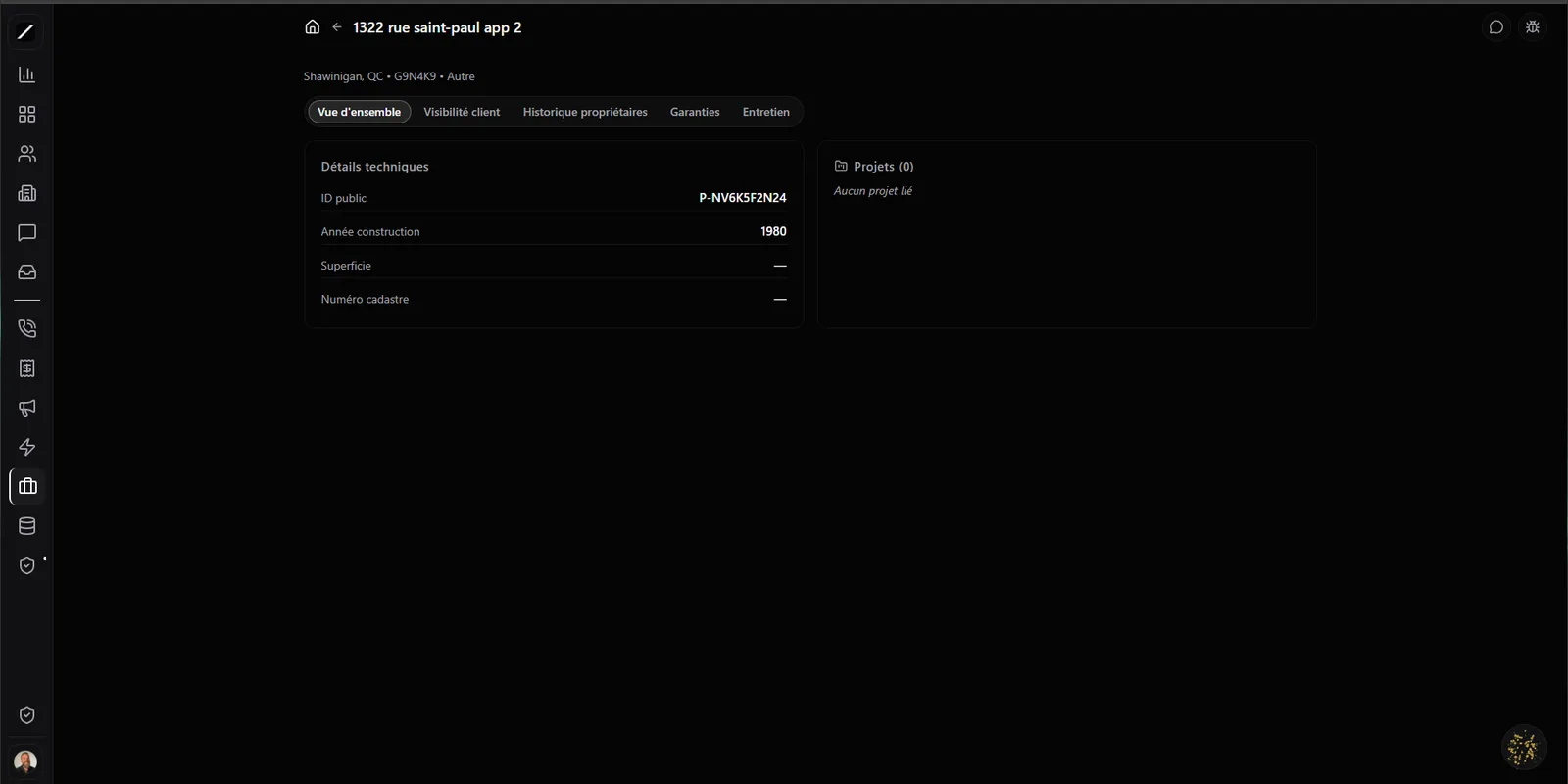
The file that outlives the job — and that changes hands.
Most contractor portals are ephemeral: the job ends, and the data disappears. The client keeps nothing, and neither do you. The House Passport does the opposite: it's a persistent property file that stays alive after the work — and when the house sells, it follows to the buyer.
At the moment of the sale, the seller transfers the passport — with its transferable warranties — to the buyer, in one secure step. The buyer clicks a link, accepts, and inherits everything: the house history, the installed products, the warranties still valid — in one clean transaction, with no risk of a half-transferred file. Something no construction portal does.
Install a window — the warranty creates itself.
When you tag the installed products on a job — a roof, windows, a heat pump — the warranty creates itself: with the right end date based on the manufacturer's duration, plus whether it's transferable. You do nothing, and the warranty file exists.
And toncrm reminds you — and reminds the homeowner — before each warranty expires: six months, three months, one month ahead. Never again a warranty gone past due without anyone noticing. When a client calls you six years later, you have the answer in two seconds instead of digging through your old emails.
A portal in your colours, for your client.
On your side, you have a dashboard to manage your properties. On your client's side, they have their own portal to see their house: their properties, their warranties, their invoices, their documents, their photos — in YOUR colours, with your logo, not ours. You can even hide the “powered by” and use your own domain. For your client, it's your company that looks like it built the software.
You choose exactly what the client sees.
You have complete control over what the homeowner sees, section by section — there are twenty-one. You show the warranties and the photos, you keep your internal stuff internal. Each client gets the right level of transparency, and nothing you don't want to share ends up in front of their eyes.
A warranty claim in two clicks.
When something goes wrong, the homeowner files a claim right from their portal — a subject, a description, photos — and you get notified by email. The whole exchange lives in one place, instead of a call you'll forget or an email lost in your inbox.
The client feels taken care of, and you have a clear record of every claim, from opening to resolution.
Law 25 compliant, right from the start.
Managing the data of a house and its owners comes with real obligations under Quebec's Law 25 — and toncrm builds them into the product, instead of leaving you to improvise. For a small business, it's one weight off your shoulders: you answer a request without panicking and without paying a lawyer every time.
The upkeep that brings work back to you.
The passport isn't just a file that sleeps: it's a relationship that keeps working for you. When a maintenance need comes up, the homeowner can request a quote right from their portal — and it becomes a hot lead for you. Work that comes back, without paying a penny in ads.
And since it's the current owner reaching out — even if they're no longer your original client — the passport wins you clients you'd never have known: the new buyer of the house you renovated five years ago.
Built for construction and real estate.
The Passport is built first for businesses whose work is tied to a property: construction and real estate, where your client sells their house and the file follows along. That's where the magic of the transfer works best: an asset that changes hands, and all its history travelling with it.
The House Passport, in brief.
Everything about the House Passport.
Give your houses a passport.
14 days free, no card. Or book a demo, we'll set up your first House Passport with you.
We set up your first House Passport with you in the demo.
